1.831.455.1004 info@stoutagtech.com
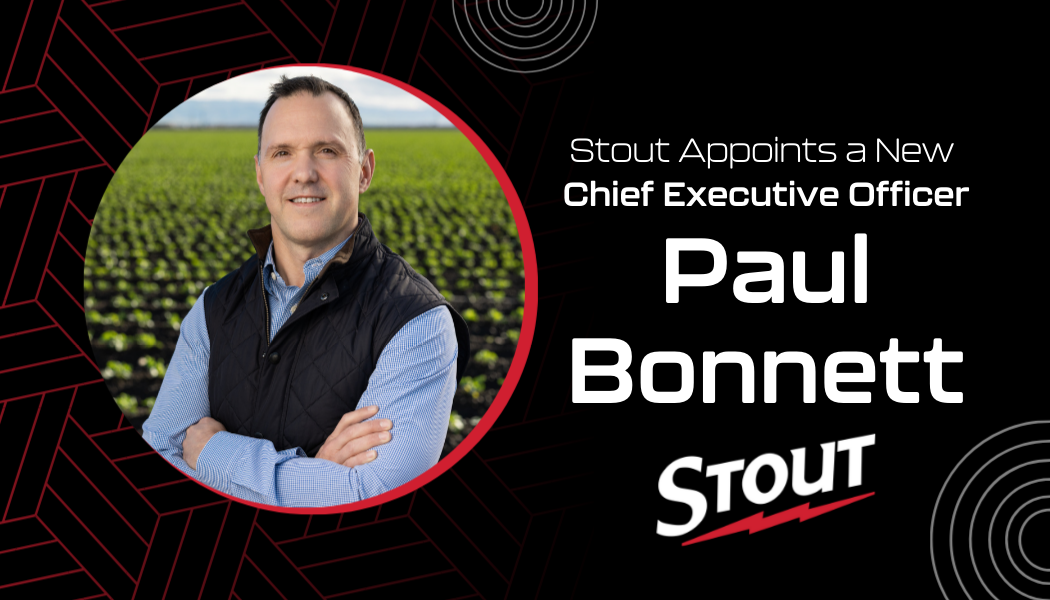
Stout Appoints Paul Bonnett as Chief Executive Officer

Stout Appoints Paul Bonnett as Chief Executive Officer

Stout Industrial Technology Appoints Paul Bonnett as Chief Executive Officer 

Salinas, CA (January 7, 2026)
 
 
Stout Industrial Technology, a leader in AI-powered agricultural automation and plant data analytics, is pleased to announce the appointment of Paul Bonnett as Chief Executive Officer.
Bonnett brings more than 27 years of global agribusiness experience and a proven track record of driving innovation, growth, and sustainability across the agricultural technology landscape. Most recently, he led Waypoint Analytical, the largest agricultural analytical service organization in North America, through transformative growth as CEO – quadrupling revenue and tripling EBITDA while introducing groundbreaking soil DNA science platforms and AI-powered agronomy solutions.
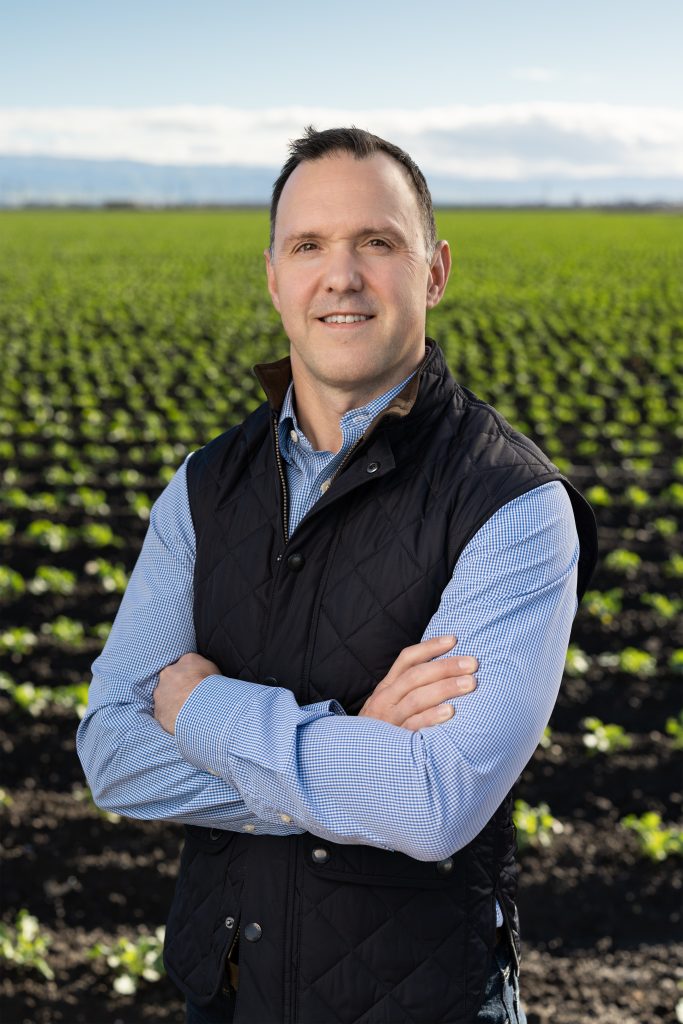
Alongside leading Waypoint, Bonnett served in senior leadership roles at Nutrien Ag Solutions, where he spearheaded the development and adoption of state-of-the-art agronomic solutions across North America’s including precision agriculture, environmental science and innovation farm networks. Earlier in his career, he held global leadership positions at Syngenta, advancing crop protection, seed genetics, and digital technology strategies.
 

“Stout Industrial Technology has shown that AI and robotics have a real place in the field. I’m excited to bring my global agriculture experience to help scale this innovative platform. Together, our team is ready to tackle the toughest operational challenges facing growers and the industry today,” said Paul Bonnet, CEO of Stout Industrial Technology.

 
Bonnett holds a master’s degree in Chemical Engineering from Loughborough University and a Ph.D. in Crop Protection Chemistry from Manchester University. He is widely recognized as an innovator in agricultural science and technology, credited with multiple patents and frequently invited to share his expertise at leading industry conferences and forums.
 
As Stout enters its next phase of growth, the company continues to build its reputation as a grower-built, field-proven technology partner delivering automation and actionable data insights to crop producers worldwide. Its flagship product, the Stout Smart Cultivator, combines rugged engineering with advanced machine vision and artificial intelligence to mechanically weed and cultivate fields with 99.99% accuracy – eliminating weeds without harming crops. Each machine replaces 25–30 hand-weeding laborers, enabling growers to reduce costs, improve precision, and operate on their own schedule. Beyond automation, Stout’s plant data analytics platform transforms field-level data into executive-ready insights, empowering growers to make smarter decisions, optimize operations, and maximize ROI. Stout delivers solutions trusted worldwide by growers and proven to perform in the toughest field conditions.
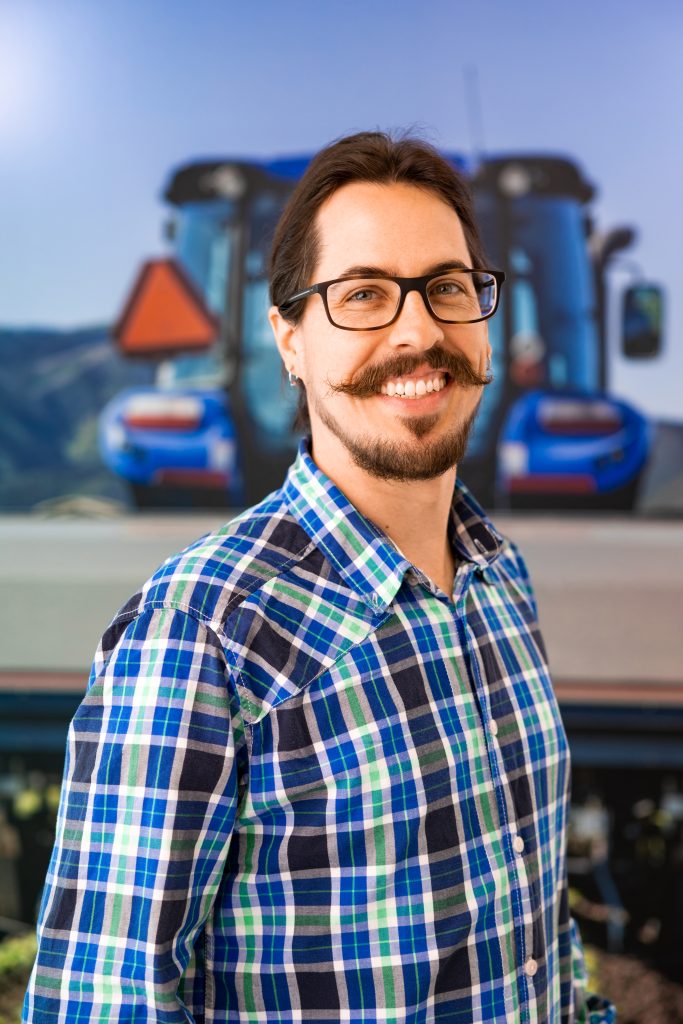
“Paul’s leadership and deep expertise in agronomy, data science, and technology make him the ideal choice to guide Stout into its next phase of growth,” said Steven Snyder, Co-Founder at Stout. “His proven ability to turn technology into measurable value for growers will strengthen Stout’s leadership in delivering actionable insights and ROI through field-proven automation and analytics solutions.”
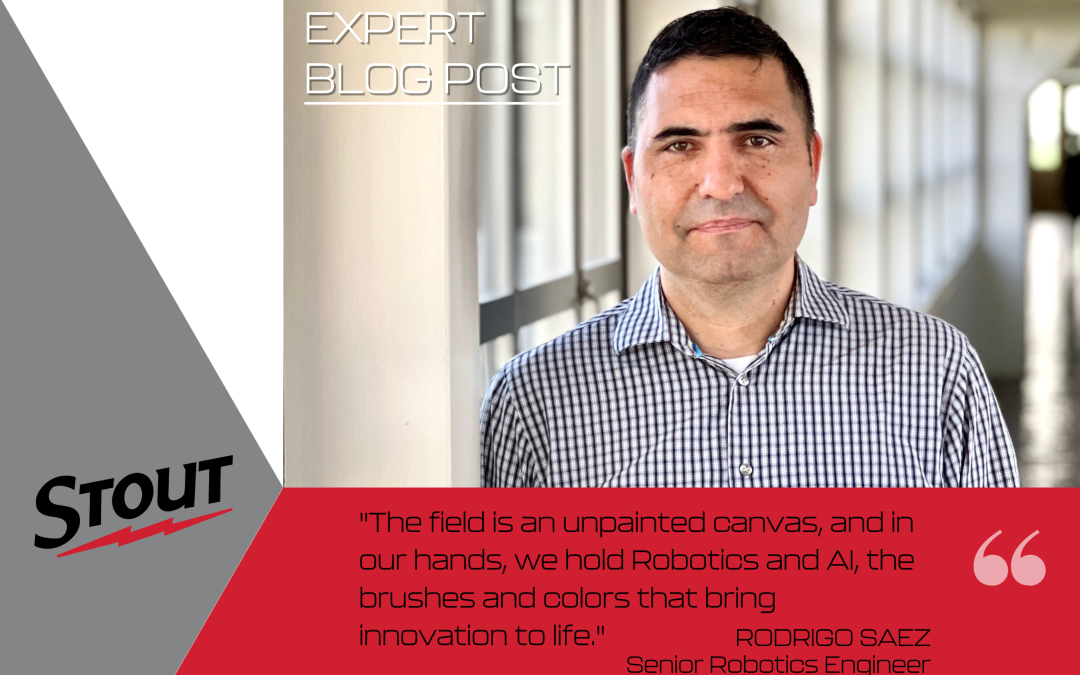
Rodrigo Saez on Robotics, Innovation, and the Future of Smart Farming

Rodrigo Saez on Robotics, Innovation, and the Future of Smart Farming

My passion for robotics began when I was 12. I took apart an old AM radio and turned it into an alarm system connected to my Atari 800XL (home computer). It was a small experiment, but it changed everything. It sparked a lifelong fascination with how machines can extend human capability. 

As an engineer, I’ve always been drawn to solving problems that matter. Early in my career, I developed the country of Chile’s first road and route map using DGPS systems, two years before Google Maps came along. Later, I joined Independent Driving Systems in Texas, where I helped robotize and automate over 300 vehicles, restoring mobility for disabled individuals and veterans. I also contributed to the U.S. Department of Defense’s Unmanned Convoys Project, now known as Automating Army Convoys. 

Today, I’m proud to be part of Stout as a Senior Robotics Engineer. In just over a year, I’ve had the opportunity to work with a team that’s as passionate and curious as I am. What drew me to Stout was the unique blend of mechanical precision, artificial intelligence, and a culture of relentless innovation. Every day, we’re pushing boundaries, whether it’s building digital crops with LED arrays to simulate real field conditions or developing vision programs that analyze color and assess plant health. At Stout, robotics and AI are our paintbrushes, and the field is our canvas. 

When it comes to agricultural robotics, precision is everything. Our Smart Cultivator integrates LiDAR, computer vision, and GPS geo-referencing to operate with millimeter-level accuracy. These systems collect and process real-time data that feeds our AI, ensuring every movement is deliberate and efficient. While developing our Smart Rate Fertilizer (SRF) system, we built custom mass flow sensors, high-frequency pressure monitors, and laminar flow velocity sensors, tools that didn’t exist until we created them. That’s the Stout philosophy: if it doesn’t exist, we invent it. 

One of my favorite projects was also one of the simplest. I designed a simulator using LEDs to replicate the motion of a lettuce field. It saved us countless hours in field testing and reminded me that creativity can be just as powerful as complexity. 

To me, robotics is all about connection, how sensors, processors, and control loops communicate, much like our nervous system connects to our brain. A system can only move and “think” correctly when those control loops are perfectly tuned. 

Agriculture presents unique challenges for robotics. No two fields are the same. Soil texture, light, and weather are constantly changing. Our machines need to adapt just like humans do. What excites me most about the next decade is how far we’ll take that adaptability. Artificial Intelligence has only recently become mainstream, and the next leap, Artificial General Intelligence (AGI), could arrive as soon as 2026 or 2027. That shift could revolutionize agriculture, enabling autonomous swarms of self-sustaining machines to manage fields without human intervention. 

Even today, robotics plays a bigger role in farming than most people realize. Data once used on Wall Street is now being applied to agriculture through metadata analysis. At Stout, our cameras and sensors process billions of data points to track everything from plant health to yield projections. We’re turning raw information into actionable insights that help growers make faster, smarter decisions. 

Robotics and AI are just tools. It’s your imagination that gives them purpose. Agriculture still has countless problems to solve, and it will take bold, creative minds to do it. The fusion of robotics, AI, and human ingenuity will define the next era of farming, and I’m honored to be part of that journey. 

From Cultivation to Data Innovation: My Vision for the Future of Ag Tech

From Cultivation to Data Innovation: My Vision for the Future of Ag Tech

I’ve been fortunate to work and lead across four continents, living in the U.S., Canada, Indonesia, and Singapore, and I’ve found that no matter the culture, religion, or background, people everywhere share the same core desires: to provide for their families and to do meaningful work. That understanding has shaped my leadership style. At Stout Industrial Technology, I focus on empowering people, listening to diverse perspectives, and encouraging collaboration across all functions. 

When I joined the ag tech space after decades in oilfield services, I was drawn to the scale and purpose of agriculture. It’s one of the most noble industries in the world, essential to every community. I wanted to be part of a smaller, more agile industry where innovation could be driven quickly and directly in partnership with those who benefit from it most: farmers. 

From Smart Cultivator to Smart Agriculture 

While the Smart Cultivator is an incredible piece of technology, I don’t see Stout’s future as being just a cultivator company. We’re moving toward becoming a smart agriculture and smart data company. The Smart Cultivator is our entry point; it enables us to collect plant-level data that can then be transformed into actionable insights for growers. 

Our vision is to provide predictive plant health metrics that help farmers increase yield, reduce costs, and make better decisions in real time. Hardware will remain important, but our revenue and growth will increasingly come from data and software solutions that deliver lasting value in the field. 

Turning Data Into Impact 

We’re on the verge of launching our basic first step approach of predictive plant health tools, which will allow growers to address issues before they impact yield, shifting the industry from reactive management to proactive strategy. 

For me, every innovation must pass a simple test: does it deliver measurable value in the field? That could mean increasing yield, reducing labor, or lowering costs, but if it doesn’t impact one of those areas, it’s not worth pursuing. 

Scaling With Integrity 

Technology in agriculture only works if it’s been proven under real-world conditions. That’s why we “ground truth” everything we build, working with strategic partners like Tanimura & Antle, G’s and Monette Farms to test in actual fields before bringing products to market. This ensures we deliver solutions that not only perform in theory but also stand up to the challenges growers face every day. 

Looking Ahead 

Five years from now, I want Stout to be known globally as a trusted provider of agricultural data and insights, not just our Smart Cultivator. My goal is to help make food more affordable and accessible by improving yields and driving efficiency across the industry. 

Innovation matters, but science matters more. By blending AI, automation, and deep grower partnerships, I believe we can help farmers meet the demands of a growing population while protecting the land and resources we all depend on. 

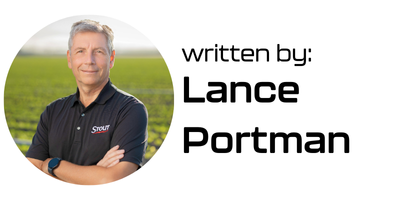
About Lance 

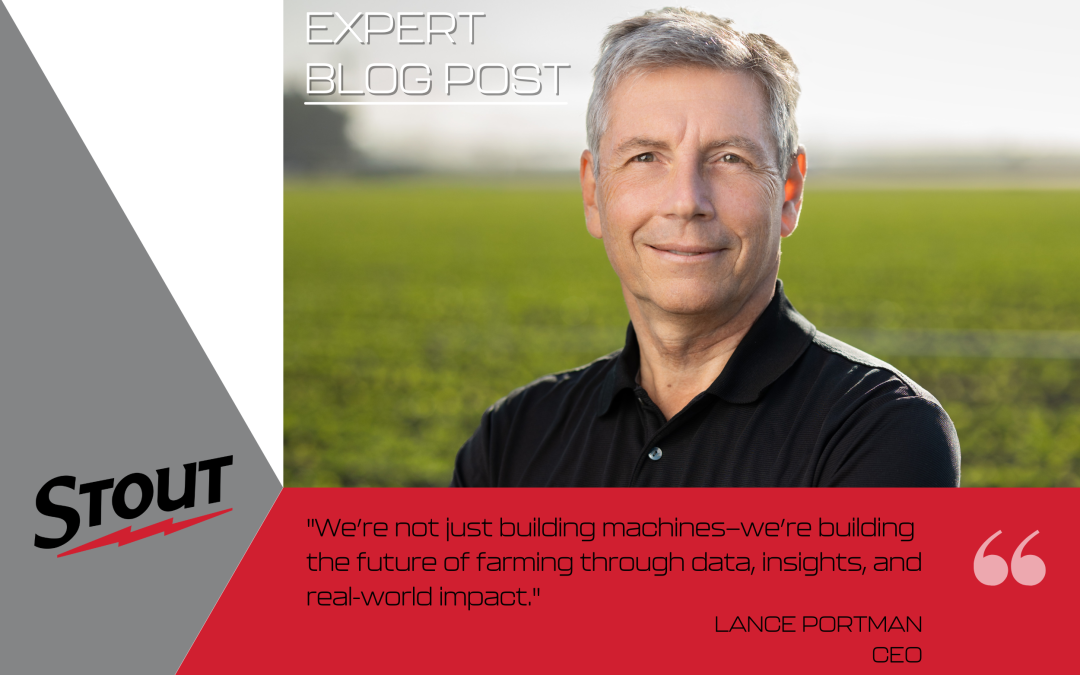
Lance Portman is the CEO of Stout Industrial Technology, bringing over three decades of global leadership experience across the U.S., Canada, Indonesia, and Singapore. Before joining Stout, Lance served as President of PlantTape, where he guided the company through significant innovation and expansion. With a background spanning oilfield services and ag tech, he is passionate about using automation, AI, and predictive data to help farmers increase yields, improve efficiency, and shape the future of sustainable agriculture. 

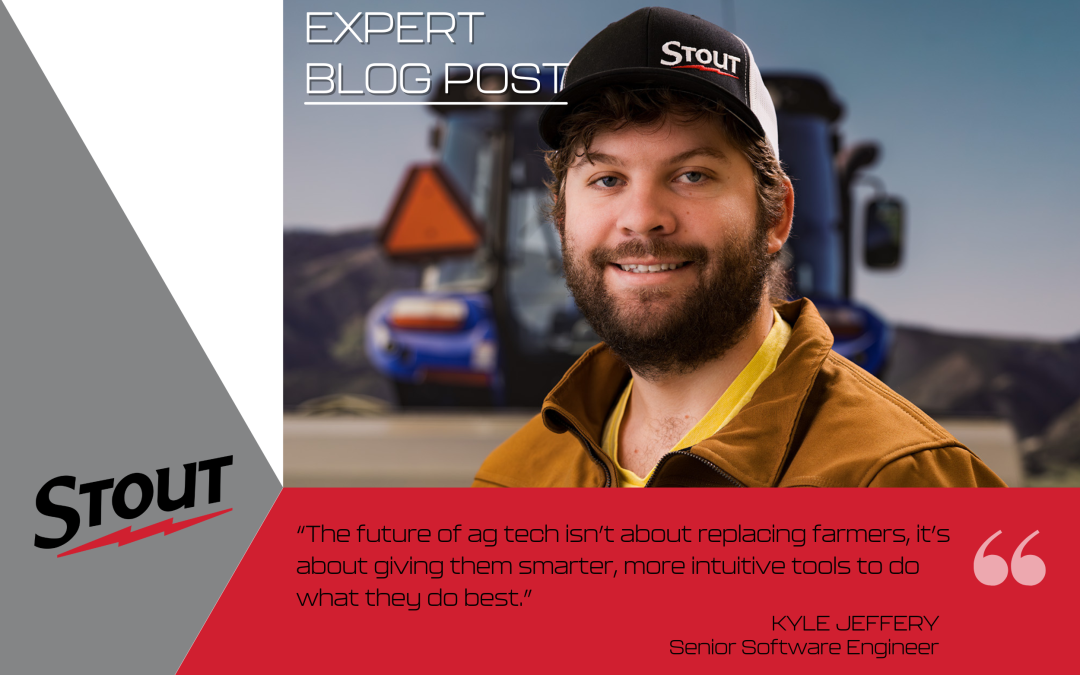
Kyle Jeffery on Full-Stack Development, Data-Driven Farming, and the Future of Ag Tech

Kyle Jeffery on Full-Stack Development, Data-Driven Farming, and the Future of Ag Tech

When I joined Stout as a Senior Software Engineer, I saw a unique opportunity to bring meaningful innovation and cutting-edge software development to an industry that’s historically been underserved by technology. My career has spanned everything from VR robotics at X, the Moonshot Factory, to full-stack cloud infrastructure, but agriculture felt like a space where innovation could make a truly tangible impact.  

I first worked on ag tech projects while studying at UC Santa Cruz, and even back then, it was clear that farming is filled with challenges that data and software are uniquely positioned to solve.  At Stout, I get to build the tools that make that transformation real – from backend data systems to intuitive mobile and in-cab apps. Every day is different. One minute I’m debugging code in our mobile app, and the next I’m optimizing the backend of our data pipeline or reviewing machine vision outputs from the Smart Cultivator. I thrive on that variety. There’s a rhythm to the work – building, releasing, collecting feedback, and refining. We operate in tight cycles of iteration, which allows us to test new features quickly and roll out improvements that respond directly to what growers are seeing in the field. 

One of the most exciting challenges we take on is building intuitive, rugged software that stands up to field conditions. Our goal is to make complex technology feel simple for operators. We’ve built mobile and in-cab apps that allow crews to monitor the machine in real time, see what the cameras see, and adjust cultivator settings on the fly. React Native, Python FastAPI, and AWS Cloud Services are just some of the tools I use to build flexible platforms that scale as our customers’ needs evolve. 

Looking ahead, I’m especially excited about how AI and automation will continue to shape agriculture. Stout’s Smart Cultivator already performs multiple functions, mechanical weeding, plant-level scanning, and data capture, in a single pass. But this is just the beginning. AI has the power to transform how growers forecast yields, monitor plant health, and make decisions based on real-time and historical field data. We’re laying the groundwork for that future now with tools that are modular, configurable, and designed to adapt to changing field conditions. 

Our software team functions a lot like a startup within the company: lean, collaborative, and always pushing to do more with less. That means every developer plays a cross-functional role, wearing many hats. I manage our fleet tools, contribute to our VRF software, and help design debugging systems that make troubleshooting easier across the board. We also rely heavily on customer feedback to guide product direction, and that connection to the grower makes our work all the more meaningful. 

To any young software or robotics engineer looking to get into ag tech, my advice is simple: follow your curiosity and build things that interest you. The skills you develop through personal projects and side experiments often translate directly to the field. Agriculture may be behind other industries in tech adoption, but that gap is exactly where the opportunity lies, and at Stout, we’re working every day to close it. 

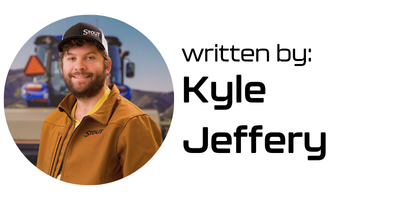
About Kyle: 

Kyle Jeffery is a Senior Software Engineer at Stout Industrial Technology, where he designs and develops full-stack software systems that power next-generation agricultural equipment. With a background spanning robotics, cloud infrastructure, and mobile development, Kyle brings a unique perspective to ag tech innovation. From building debugging tools to advancing machine vision and AI-driven automation, he’s passionate about creating intuitive platforms that make farming smarter, more efficient, and data-driven.

Robert Rodriguez on Field-Ready Machines, Customer-Focused Ops, and Why Durability Matters

Robert Rodriguez on Field-Ready Machines, Customer-Focused Ops, and Why Durability Matters

I spent 22 years in the Army, where reliability and precision weren’t just goals – they were requirements.  Now, as Operations Manager at Stout, I bring that same mindset and commitment into agriculture. After retiring from the Army, I earned degrees in Ag Business and quickly saw the impact AI and robotics were starting to have on farming. Once I got hands-on experience with the Stout Smart Cultivator, I knew I had found my next mission. 

Every morning, I start by opening the shop, reviewing work orders, and making sure our schedule reflects the priorities that matter most: uptime and performance.   My role is about being ready to pivot – whether that means retrofitting machines, responding to field calls, or helping troubleshoot issues firsthand. 

Before any Smart Cultivator leaves our facility, we put it through a detailed testing process. We’ve built these checklists from years of field experience – every actuator, every wire, every system is tested. We log 6 to 10 hours of run time per machine, and if something isn’t right, it doesn’t ship. Period. 

One of the things I’m proudest of is how we build based on feedback from growers. Our SPH (Smart Powered Hydraulics) system came directly from conversations in the field. I worked with R&D and engineering to move it through our ECO process – from idea to implementation. That’s what makes Stout different: we listen, and we act. 

I spend 40 to 60% of my time in the field. You can’t fully understand an issue until you see it yourself: the soil, the weather, the crew dynamics. I talk with operators, watch their workflows, and think critically about how we can make our machines better. Our reliability starts with those real conversations. 

We’ve built out support systems that go far beyond a manual. From teardown videos to bilingual training resources to live video calls, we’re committed to making sure operators (not just managers) know how to run, maintain, and optimize their machines. 

As Stout evolves into a data-driven company, our operations have evolved too. We now preload computers, install vision systems, and fully program each machine before it ships. We don’t wait for things to break; we’re always improving, always checking in, always looking for ways to add value during maintenance. 

To me, reliability means building machines that hold up in any field condition: hard soil, wet rows, heat, cold, you name it. That’s where I focus. Because in this business, durability isn’t just nice to have, it’s everything.


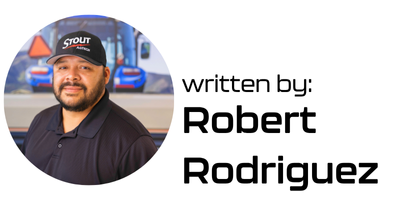
About Robert Rodriguez 

Robert Rodriguez is the Operations Manager at Stout Industrial Technology, where he brings more than two decades of military maintenance experience to the cutting edge of agricultural innovation. After earning a degree in Agriculture Business, he transitioned into ag tech, inspired by the transformative potential of robotics and AI in the field. Known for his field-first mindset, Robert is deeply committed to machine uptime, operational precision, and long-term customer success. Whether he’s leading operations or working directly with growers, Robert ensures every machine meets the highest standard of performance. Outside of work, he enjoys boating, fishing, and spending quality time with his family. 

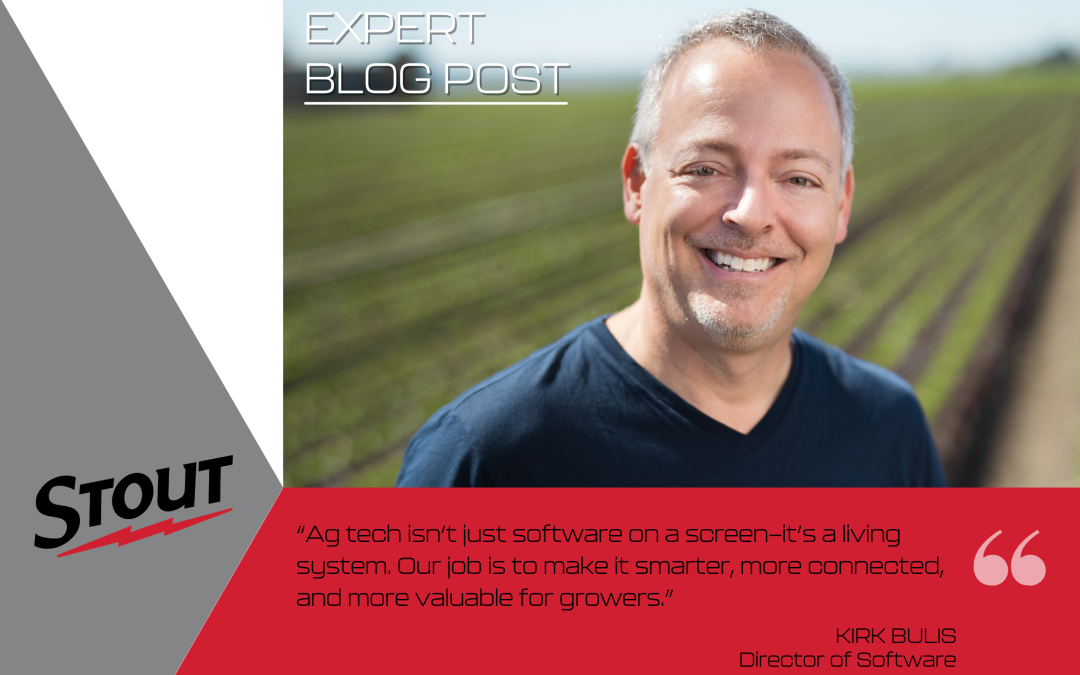
Kirk Bulis on Software, Strategy, and the Future of Ag Tech

Kirk Bulis on Software, Strategy, and the Future of Ag Tech

From Silicon Valley to the Field: A Practical Approach to Ag Tech

Transitioning from Consumer Tech to Ag Tech: My Journey to Stout

My path into Ag Tech wasn’t a straight line. I studied computer science at UCLA, where I focused on robotics and cloud computing. After working across various enterprise software teams, from interactive retail at Sonos to early consumer tech projects in the iPod era, I found myself craving a challenge with real-world impact.

In late 2023, Steven Snyder reached out to me. We’d shared an advisor at UCLA, and when he invited me to visit Stout, the energy and potential were what sold me on joining the team. I joined Stout in early 2024 as Director of Software, ready to scale the company’s cloud and edge software infrastructure. From day one, I’ve been focused on helping growers access data they can actually use to drive ROI.

Data That Drives Action: Turning Information into Insights

Transforming Field Data into Actionable Insights for Growers

At Stout, my priority is turning data into insights that growers can actually use. That means building systems that are intuitive, reliable, and aligned with field realities. My team and I work closely with early adopters like Tanimura & Antle to ensure that our tools are practical and impactful.

One of the biggest challenges is managing the sheer volume of data generated by the Smart Cultivator. We’re developing solutions that not only capture and process this data effectively but also present it in ways that are easy for growers to visualize and act upon. We’re not just looking at what happened yesterday — we’re focused on identifying trends and projecting what’s coming next.

Proven Solutions Built By Growers, for Growers

Building Trustworthy, Reliable Ag Tech Solutions

For me and the Stout software team, building systems that growers can trust is essential. That means more than just coding; it’s being in the field, understanding what growers need, and creating solutions that work seamlessly under real world farming conditions.

Right now, we’re finalizing a web app that provides field-level data on plant size, spacing, and growth patterns. The goal is to give growers the data they need to make smarter decisions, optimize operations, and reduce costs—without adding unnecessary complexity.

The Future of Ag Tech: Empowering Growers, Not Replacing Them

How AI and Edge Computing Enhance Precision Agriculture

For me, AI isn’t about replacing growers, it’s about making them even more effective. The next wave of AI and edge computing at Stout will focus on delivering actionable, predictive insights that help growers anticipate and address challenges before they arise.

Generative AI and large language models are incredibly powerful, but they’re only as valuable as the insights they deliver. At Stout, our mission is to leverage these technologies to give growers more control, more predictability, and more confidence in their operations.

Advice for Engineers and Ag Leaders

How Ag Tech Engineers Can Make a Real-World Impact

For engineers considering Ag Tech, my advice is simple: Get to know the field. For engineers entering Ag Tech, it’s more than just writing code, it’s about creating practical solutions that address the daily challenges growers face.

My proudest achievement at Stout so far? Moving our data platform from a patchwork of tools to a cohesive, scalable system that empowers growers with faster updates, more reliable insights, and stronger decision-making capabilities. It’s a foundation we’re going to keep building on, one release at a time.

About Kirk Bulis

Kirk Bulis is the Director of Software at Stout Industrial Technology, where he leads the development of scalable cloud and edge platforms for smart agricultural machinery. With over two decades of experience in software architecture and full-stack development, Kirk has worked across industries, from interactive retail experiences at Sonos to data-driven healthcare systems. He holds a master’s in Computer Science from UCLA and brings a practical, systems-focused mindset to advancing precision agriculture through innovative software solutions.

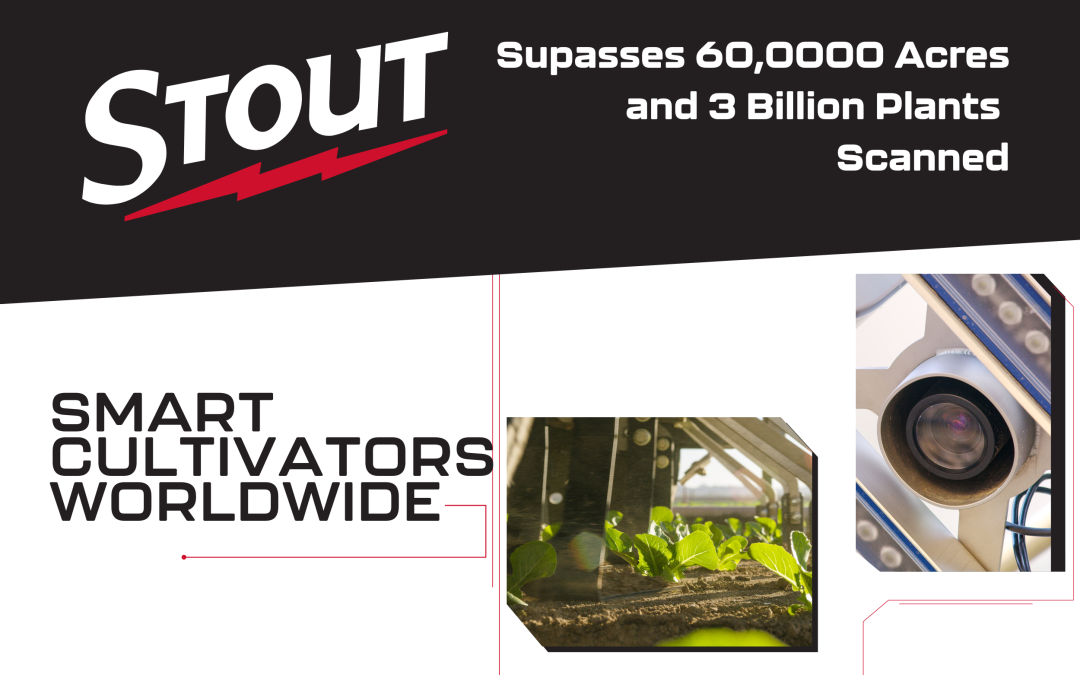
Stout Surpasses 60,000 Acres and 3 Billion Plants Scanned

Stout Surpasses 60,000 Acres and 3 Billion Plants Scanned

In a space crowded with prototypes and pilot programs, Stout Industrial Technology stands apart — delivering automation that’s working, scaling, and trusted in commercial fields around the world.  The company announced today that its AI-powered Smart Cultivator has now covered more than 60,000 acres, scanned over 3 billion plants, and traveled the equivalent of three laps around the planet. These are real-world numbers from production farms across six countries—proof that Stout’s technology is scalable and built to perform.

With Smart Cultivators now operating across three continents, multiple countries, and numerous U.S. states, Stout’s system is getting smarter every day – adapting to a wide range of climates, growing regions and crops.  Whether it is lettuce in Salinas, peppers in Virginia, or specialty crops in Europe, growers rely on Stout’s field automation to supplement labor with smart, per-plant precision in both weeding and cultivation.  There’s no question: Stout has earned its place in mainstream agricultural operations.

From design to deployment, every Stout machine is engineered for durability, ease of use, and clear return on investment.  No special engineering team is required – Stout machines are built to be operated by existing tractor drivers with minimal training.  Onboard computing means there’s no downtime due to connectivity issues, and when internet is restored, machines automatically update with the latest plant and weed models while syncing precise data to the Stout Data Dashboard.

This level of precision comes to life through the Stout Data Dashboard, which delivers real-time, per-plant insights across the field. From plant counts and growth rates to other health metrics, growers and executives gain a clear, actionable view of performance at a granular level. This visibility empowers teams to optimize operations, pinpoint field visits, and drive strategic improvements backed by high quality data.

Ryan Mazzuca, Director of Business Development

“What excites our customers most is the ability to finally see what’s happening at the field level—across every scanned acre,” said Ryan Mazzuca, Director of Business Development at Stout. “With our dashboard, growers aren’t just reacting to problems, they’re making faster, smarter decisions backed by real-time data.”

Stout’s rapid growth is no accident.  The company’s machines were built in close collaboration with growers who understand the real challenges of farm operations.  With a learn-by-doing mindset, product acceleration happens in the field – not in an office.  Based in the heart of the Salad Bowl of America, Stout’s headquarters were intentionally established in the middle of active farmland, just minutes from its production and R&D facilities.  This proximity allows the development team to engage directly with crops in real time, ensuring the technology is field tested, grower informed and ready for commercial operations.

Lance Portman, President

“Growers are tired of empty promises, and they want machines that work,” said Lance Portman, President of Stout. “At Stout, we’re no longer asking executives to take a leap of faith on our data analytics. We are showing you the acres, the numbers, the impact. This is automation that’s working to address multiple pain points for growers today — and it’s only getting better.”

About Stout Industrial Technology:  Founded in 2019, Stout Industrial Technology, Inc. builds machines that reduce labor requirements for growers by combining AI with professional-grade industrial automation.  Comprising team members from the high-stakes, high-performance industries of automotive racing, defense, aerospace, medical, agriculture, and manufacturing, Stout Industrial Technology provides solutions that are field-tested, environmentally friendly and help growers lower their operating costs while improving quality and yield.

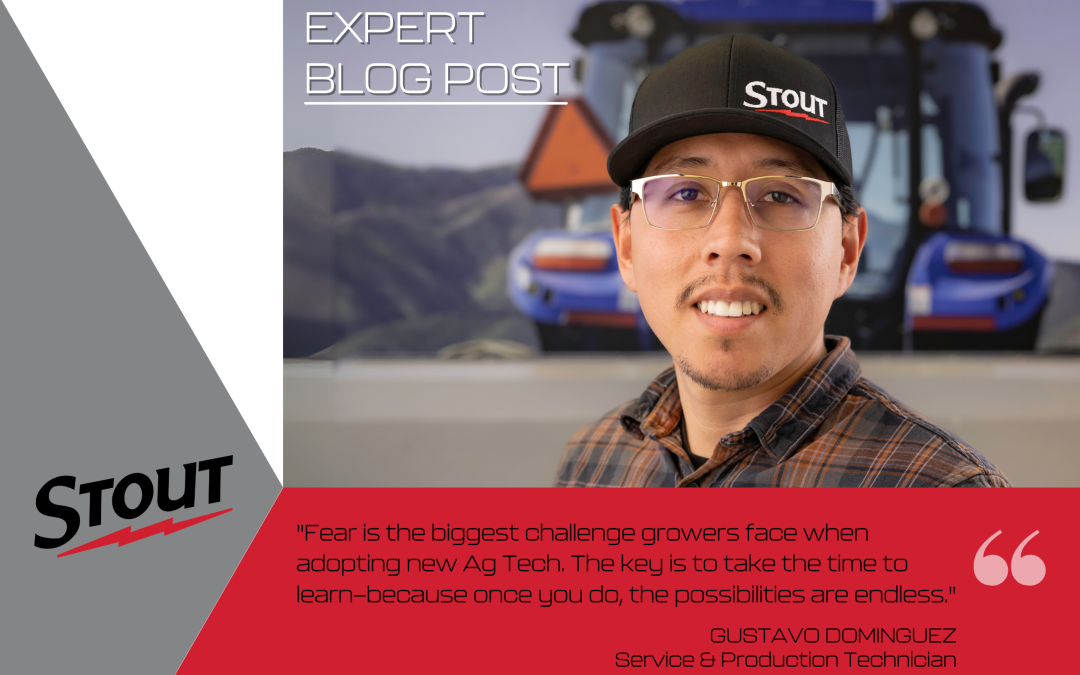
Ag Tech, Automation, and the Future of Farming with Gustavo Dominguez

Ag Tech, Automation, and the Future of Farming with Gustavo Dominguez

I’ve worked in agriculture since I was 18, but my background is in mechanics and electrical work. I originally set out to find a job in mechanical repair when I stumbled upon the Ag Tech industry by accident. I joined a company that worked on automated farming equipment, and from there, I became more intrigued by how automation and autonomous systems were shaping the future of agriculture. It was an unexpected path, but one that led me to where I am today at Stout.

I first saw Stout’s Smart Cultivator in action while I was working for another company. What impressed me was how simple it was to operate—just press start and go. In contrast, the equipment I worked with at the time required extensive calibration and back-end adjustments before it could run properly. That ease of use was what initially attracted me to Stout. Eventually, I applied for a position, and when the opportunity arose, I joined the team.

As a Service & Production Technician, my day varies based on what machines come in for servicing. We receive work orders that outline what needs to be inspected or repaired. If I’m working on a machine from the previous day, I continue troubleshooting it. If a new unit arrives, I run through a detailed checklist to identify potential issues and ensure it’s running at peak performance.

Customer support is also a key part of my role. When growers reach out with issues, I assess the problem and help troubleshoot it remotely whenever possible. One thing I’ve learned is to never assume the issue upfront.  Instead, I take the time to investigate first before giving an answer. That way, I can provide the most accurate diagnosis without jumping to conclusions.

From my experience, the biggest challenge growers face when adopting new Ag Tech is fear—fear of change, fear of technology, and fear of the unknown. Many growers have been using the same equipment and methods for years, and learning a new system can be daunting. In reality, many operational issues stem from driver error, rather than the technology itself. Some operators pick it up quickly, while others take longer to transition.

At Stout, we follow a thorough checklist to ensure every machine operates at its best in the field. This checklist is based on real-world experiences and allows us to proactively address potential issues before they become problems for customers. Many of us have worked with these machines long enough that we’ve memorized what to look for, but we still follow a structured process to maintain quality and reliability.

One of the most challenging aspects of my role has been working with Smart Powered Hydraulics (SPH) and the Stout Rate Fertilizer (SRF). Installing these systems on different machines presents a unique set of challenges that require a combination of mechanical and electrical expertise. At first, these installations were complex, but over time, they’ve become second nature with enough practice and repetition.

I don’t think Ag Tech will ever reach a point where machines are built and serviced entirely by robots. There will always be a need for skilled workers to maintain, repair, and improve these systems. The industry is shifting toward a more technical workforce, where hands-on technicians will play a crucial role in keeping automated equipment running efficiently. As Ag Tech continues to develop, I see an increased demand for specialized skills and new infrastructure to support this growing and evolving sector.

For those looking to enter the Ag Tech field, my advice is simple: be ready to move fast. This industry is constantly evolving, and staying adaptable is key. The more you learn about mechanics, electronics, and automation, the better prepared you’ll be for the opportunities ahead.

About Gustavo

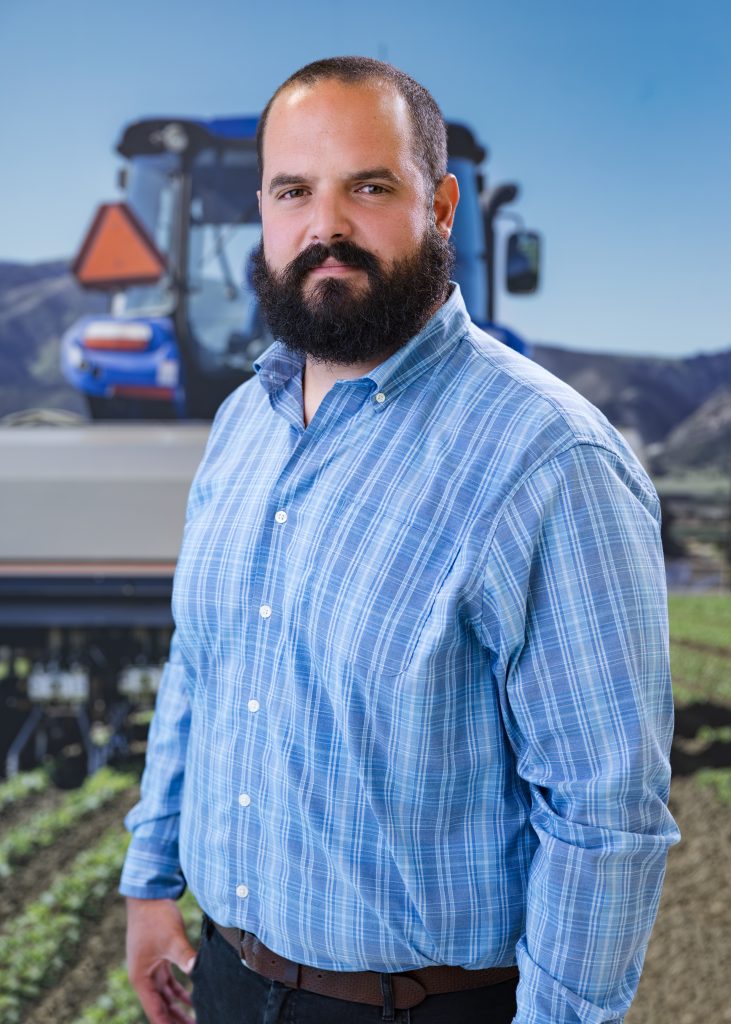
Gustavo Dominguez is a Service & Production Technician at Stout, where he specializes in maintaining and troubleshooting automated farming equipment. With a background in mechanics and electrical work, he transitioned into Ag Tech after seeing the potential of automation to transform farming operations. Passionate about innovation, Gustavo is dedicated to helping growers adopt new technology with confidence while ensuring Stout’s Smart Cultivator and other systems operate at peak performance.

About Stout

Stout is at the forefront of agricultural innovation, specializing in precision implements and AI-driven solutions that enhance efficiency and productivity for growers. Committed to pushing the boundaries of agricultural technology, Stout continues to lead the way in developing advanced machinery for the farming community.


Navigating Ag Tech: A Journey of Adaptation and Innovation with Sal Espinoza

Navigating Ag Tech: A Journey of Adaptation and Innovation with Sal Espinoza

My journey into ag tech wasn’t exactly planned, but looking back, it makes perfect sense. Early in my career, I worked in operations where everything was done the old-school way—by hand, on paper, with little to no technology involved. Scheduling, field applications, fertilizer dispatch, all of it was manual, but then I got my first taste of technology in the industry. I saw what GPS monitoring and other digital tools could do, and it changed my perspective. It became clear that there was a huge opportunity to modernize these outdated processes. I realized that not only could technology make agriculture more efficient, but it could also open doors to new possibilities that hadn’t even been considered yet. That curiosity led me down the path I’m on today.

Agriculture is unpredictable. Weather, labor availability, and market fluctuations all impact day-to-day operations. As Director of Sales Operations, I’ve had to learn how to balance structured planning with the flexibility to pivot at a moment’s notice. This industry demands both—a clear vision of where you’re headed, but also the ability to react quickly when things don’t go as planned. It’s a leadership style that embraces adaptability while staying grounded in long-term goals.

One of the toughest parts of my role is navigating the natural resistance to change within agriculture. At the end of the day, this industry is about production—getting from seed to harvest as efficiently as possible. Introducing new technology, no matter how beneficial, can be seen as a disruption. Growers need to know that integrating something new won’t just be an extra step—it has to improve efficiency without negatively impacting their bottom line.

The biggest challenge isn’t just selling a piece of equipment—it’s shifting mindsets. Many farming practices have been done a certain way for generations, and now we’re asking people to trust a machine to do the work that’s historically been done by hand. That’s a big leap. To overcome this, we focus on proving the real-world benefits of the Stout Smart Cultivator—how it reduces labor challenges, provides immediate data for decision-making, and ultimately helps growers improve their operations.

Technology is touching every part of agriculture—from the field to the packing sheds to the sales office. At Stout, our focus is on using data-driven solutions to help growers make better, real-time decisions. Instead of reacting to issues after they’ve already impacted a crop, our goal is to provide insights that allow growers to adjust before it’s too late. That’s where the future of ag tech is headed: proactive, not reactive.

Innovation isn’t always easy, and pushing boundaries comes with its challenges. But what keeps our team motivated is the fact that we’re doing something new. We’re at the forefront of a movement that’s changing the way farming operates. There are days when things don’t go as planned, when frustrations run high, but in those moments, we remind ourselves why we’re here.

The ag tech space is full of exciting developments, but not all technology is useful today. Some innovations look great on paper but aren’t ready for practical application. Our job is to refine what we offer and ensure that it truly benefits the people who use it. That means listening to growers, understanding their needs, and adapting our solutions accordingly. It’s not about pushing technology—it’s about creating solutions that make sense in the real world.

If I had to pick one skill that’s essential for success in this space, it would be understanding growers. You need real-world experience to truly grasp what they’re up against—the pressures, the regulations, and the challenges they face every day. Without that understanding, it’s difficult to communicate how technology can help. The key isn’t telling them what they need—it’s listening to what they actually need and working with them to find the best solution.

Over the next five to ten years, I think we’ll see the true potential of ag tech start to unfold. Right now, there’s a lot of excitement, but not every new innovation will stand the test of time. The companies that stay focused, listen to their customers, and truly integrate into agriculture’s real-world challenges will be the ones that succeed. Adoption won’t happen overnight—it’s a gradual process. But as the technology matures and proves itself, we’ll see a shift toward more targeted, effective solutions that become essential tools for growers.

For me, that’s what makes this field so exciting. We’re not just creating technology for the sake of it—we’re solving real problems. And as long as we stay grounded in that mission, the impact we can make is limitless.

About Sal

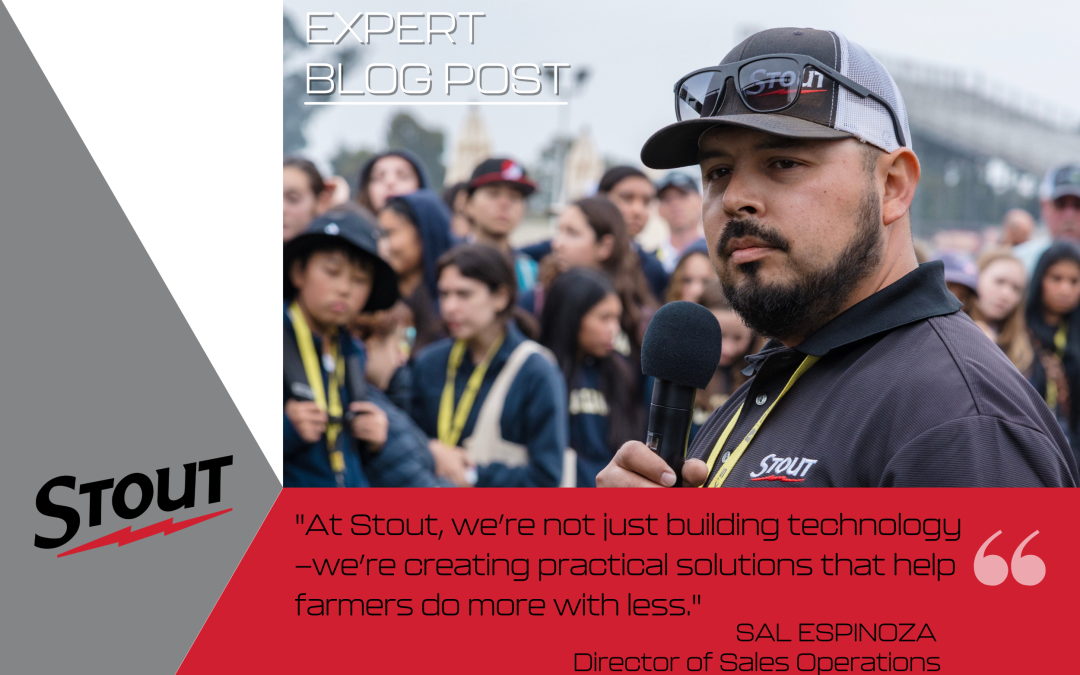
Sal Espinoza is a dedicated leader in ag tech with a passion for innovation and problem-solving. With nearly a decade of experience in agriculture, he has held key roles at Wilbur-Ellis, FarmWise, and now Stout Industrial Technology, where he drives advancements in AI-powered automation for farming. Sal’s expertise lies in developing practical, grower-focused solutions that enhance efficiency, sustainability, and profitability in the field.

About Stout

Stout is at the forefront of agricultural innovation, specializing in precision implements and AI-driven solutions that enhance efficiency and productivity for growers. Committed to pushing the boundaries of agricultural technology, Stout continues to lead the way in developing advanced machinery for the farming community.


A Day in the Life of Antonio: Stout’s Demo Technician

A Day in the Life of Antonio: Stout’s Demo Technician

I didn’t really plan to work in agriculture, it just kind of happened. I started as a tractor operator for Tanimura & Antle, learning the basics of running machines in the field. Before that, I had little experience working with machinery or doing fieldwork. Over two years, I became proficient with the equipment, but I wanted to do more. That’s what brought me to Stout.

When I joined Stout, I had to start from scratch with things like hydraulics and understanding the function of each part and how they’re all tied together. As an operator, I only knew how to make them run. Now, I’ve learned how to take them apart, fix issues, and put them back together. That’s been the biggest growth area for me in this role.

What My Job Looks Like

My week varies greatly on what demos we have lined up. If there are no demos scheduled, I focus on checking on our customers and their Stout machines. I make sure they’re running smoothly, help train new operators, answer questions, and fix any issues that come up. When there’s a demo, I make sure the machine is prepped to ensure a proper representation of our Smart Cultivator. Once everything is dialed in, I get to run and show the machine in action.

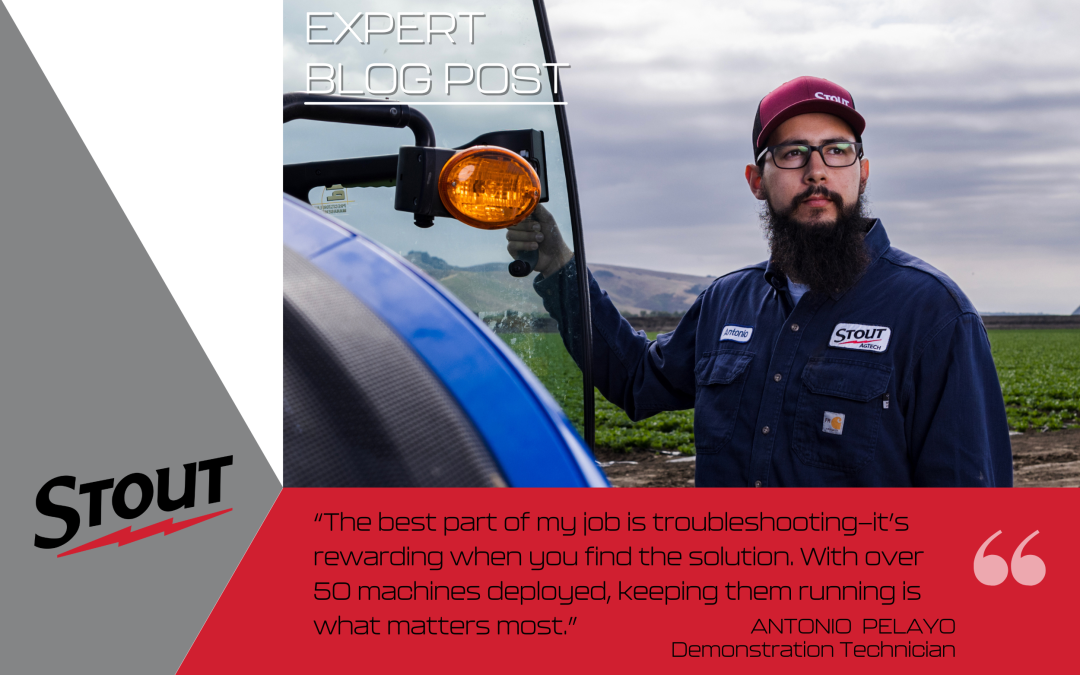
The best part of my job is troubleshooting and it’s rewarding when you find the solution. Once you’ve run into a similar problem a couple of times, familiarity with the issue reduces the time spent working on it and in turn allows the customer to continue with their normal operation. With over 50 machines deployed throughout North America and Europe, having the ability to troubleshoot over the phone is crucial for keeping our machines running smoothly for our grower partners.

Why Customers Appreciate Stout Machines

What impresses growers the most is how reliable our machines are. They’re built tough, so they can handle all kinds of field and weather conditions. From firsthand experience over the past four years, I’ve seen how well the machines perform once they’re set up properly – whether it’s day or night. Customers are always surprised by how well-built and reliable they are.

Traveling for Stout

One of the coolest things about my job is the travel. I’ve had the opportunity to work in 10 states and Mexico and Canada, meeting growers from all kinds of farming operations. It’s awesome seeing how people in different places get excited about our machines. In Mexico, I saw how much the technology would help their operations. Seeing how open they were to adapt to our machine and willing to change some of their farming practices to optimize the performance of it was eye opening.

My Advice for Someone Getting Into Ag Tech

If you’re considering a career in ag tech, give it a try. Whether it’s an internship or a short-term job, putting some skin in the game will help you gain experience and validate if it’s worth pursuing. It’s not always easy, but if you enjoy problem-solving and/or working with your hands, it’s worth it to make a difference in agriculture.

At Stout, we’re just getting started in ag tech. There’s a lot of potential, and it’s exciting to be part of something that’s helping farmers directly. For me, it’s been a chance to learn, grow, and to make a real impact in the industry.

About Antonio

Antonio is a Demo Technician at Stout, specializing in troubleshooting, machine operation, and operator training for the Smart Cultivator. Starting as a tractor operator at Tanimura & Antle, he has grown into a skilled technician, traveling to 10 states and two countries to help customers optimize their farming practices. With a customer-first approach and hands-on expertise, Antonio is proud to make a direct impact on farmers while contributing to the future of ag tech.

About Stout

Stout is at the forefront of agricultural innovation, specializing in precision implements and AI-driven solutions that enhance efficiency and productivity for growers. Committed to pushing the boundaries of agricultural technology, Stout continues to lead the way in developing advanced machinery for the farming community.