1.831.455.1004 info@stoutagtech.com
Rodrigo Saez on Robotics, Innovation, and the Future of Smart Farming

Rodrigo Saez on Robotics, Innovation, and the Future of Smart Farming

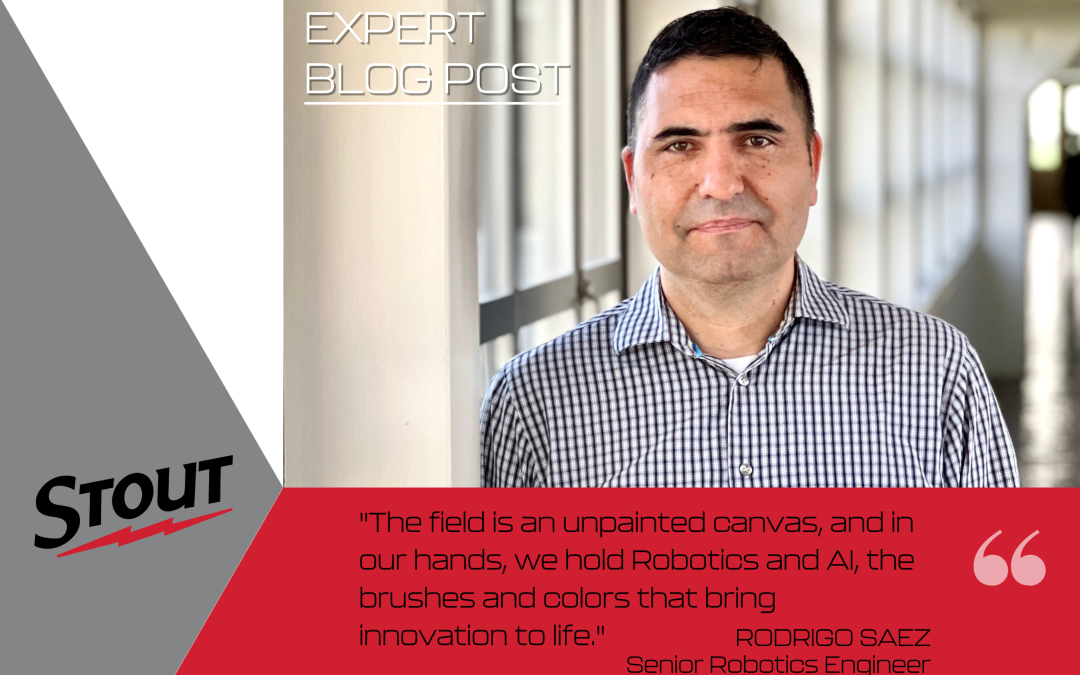
My passion for robotics began when I was 12. I took apart an old AM radio and turned it into an alarm system connected to my Atari 800XL (home computer). It was a small experiment, but it changed everything. It sparked a lifelong fascination with how machines can extend human capability. 

As an engineer, I’ve always been drawn to solving problems that matter. Early in my career, I developed the country of Chile’s first road and route map using DGPS systems, two years before Google Maps came along. Later, I joined Independent Driving Systems in Texas, where I helped robotize and automate over 300 vehicles, restoring mobility for disabled individuals and veterans. I also contributed to the U.S. Department of Defense’s Unmanned Convoys Project, now known as Automating Army Convoys. 

Today, I’m proud to be part of Stout as a Senior Robotics Engineer. In just over a year, I’ve had the opportunity to work with a team that’s as passionate and curious as I am. What drew me to Stout was the unique blend of mechanical precision, artificial intelligence, and a culture of relentless innovation. Every day, we’re pushing boundaries, whether it’s building digital crops with LED arrays to simulate real field conditions or developing vision programs that analyze color and assess plant health. At Stout, robotics and AI are our paintbrushes, and the field is our canvas. 

When it comes to agricultural robotics, precision is everything. Our Smart Cultivator integrates LiDAR, computer vision, and GPS geo-referencing to operate with millimeter-level accuracy. These systems collect and process real-time data that feeds our AI, ensuring every movement is deliberate and efficient. While developing our Smart Rate Fertilizer (SRF) system, we built custom mass flow sensors, high-frequency pressure monitors, and laminar flow velocity sensors, tools that didn’t exist until we created them. That’s the Stout philosophy: if it doesn’t exist, we invent it. 

One of my favorite projects was also one of the simplest. I designed a simulator using LEDs to replicate the motion of a lettuce field. It saved us countless hours in field testing and reminded me that creativity can be just as powerful as complexity. 

To me, robotics is all about connection, how sensors, processors, and control loops communicate, much like our nervous system connects to our brain. A system can only move and “think” correctly when those control loops are perfectly tuned. 

Agriculture presents unique challenges for robotics. No two fields are the same. Soil texture, light, and weather are constantly changing. Our machines need to adapt just like humans do. What excites me most about the next decade is how far we’ll take that adaptability. Artificial Intelligence has only recently become mainstream, and the next leap, Artificial General Intelligence (AGI), could arrive as soon as 2026 or 2027. That shift could revolutionize agriculture, enabling autonomous swarms of self-sustaining machines to manage fields without human intervention. 

Even today, robotics plays a bigger role in farming than most people realize. Data once used on Wall Street is now being applied to agriculture through metadata analysis. At Stout, our cameras and sensors process billions of data points to track everything from plant health to yield projections. We’re turning raw information into actionable insights that help growers make faster, smarter decisions. 

Robotics and AI are just tools. It’s your imagination that gives them purpose. Agriculture still has countless problems to solve, and it will take bold, creative minds to do it. The fusion of robotics, AI, and human ingenuity will define the next era of farming, and I’m honored to be part of that journey. 

From Cultivation to Data Innovation: My Vision for the Future of Ag Tech

From Cultivation to Data Innovation: My Vision for the Future of Ag Tech

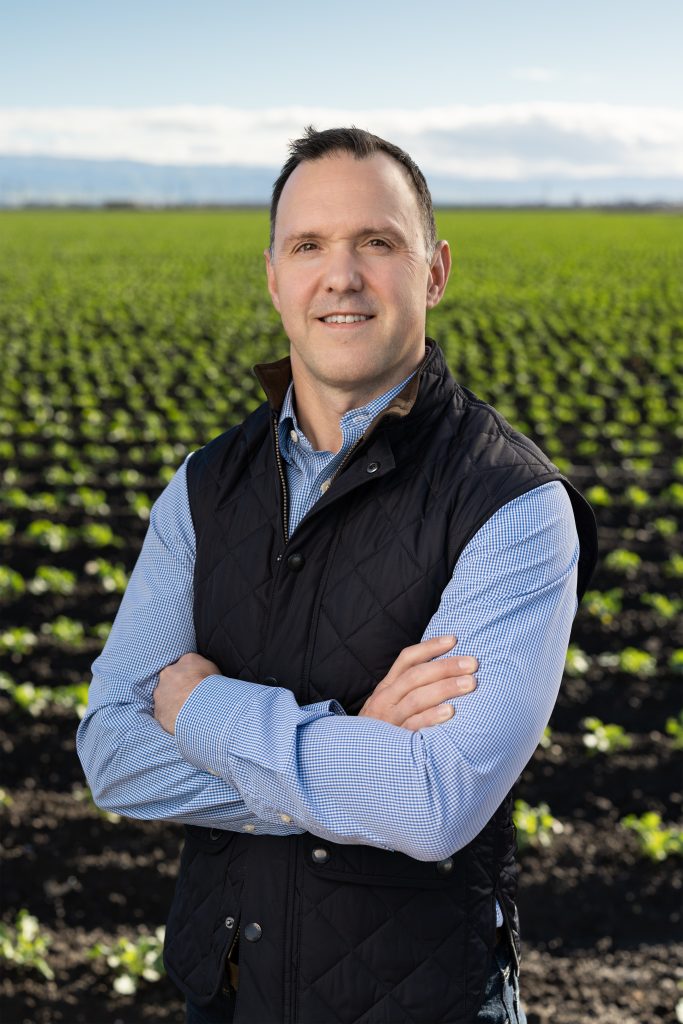
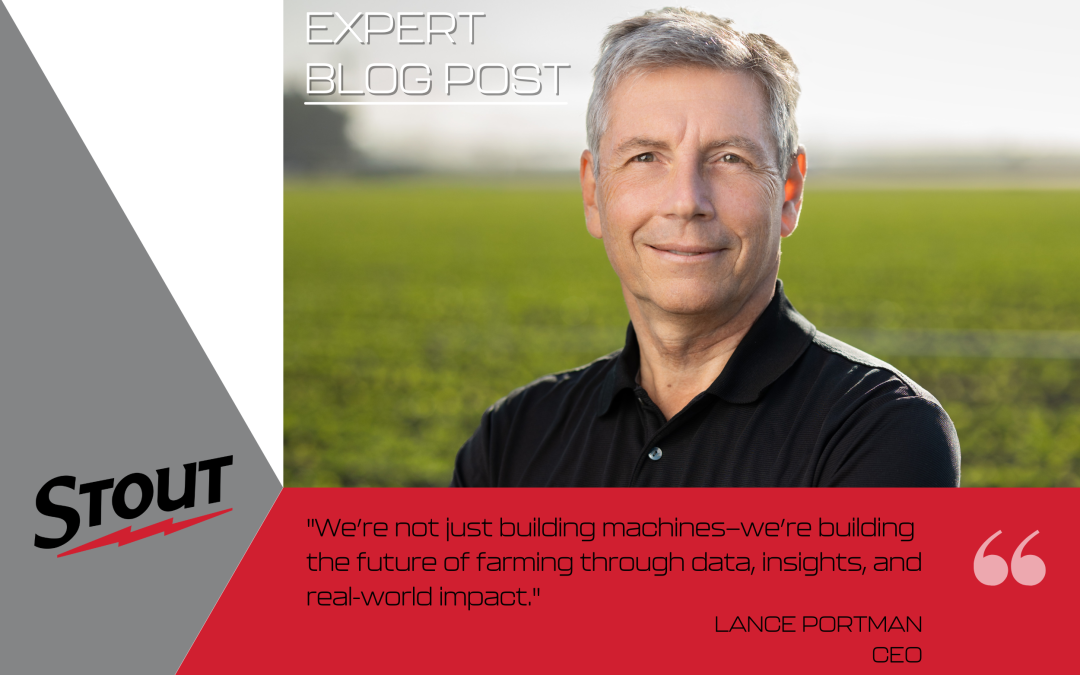
I’ve been fortunate to work and lead across four continents, living in the U.S., Canada, Indonesia, and Singapore, and I’ve found that no matter the culture, religion, or background, people everywhere share the same core desires: to provide for their families and to do meaningful work. That understanding has shaped my leadership style. At Stout Industrial Technology, I focus on empowering people, listening to diverse perspectives, and encouraging collaboration across all functions. 

When I joined the ag tech space after decades in oilfield services, I was drawn to the scale and purpose of agriculture. It’s one of the most noble industries in the world, essential to every community. I wanted to be part of a smaller, more agile industry where innovation could be driven quickly and directly in partnership with those who benefit from it most: farmers. 

From Smart Cultivator to Smart Agriculture 

While the Smart Cultivator is an incredible piece of technology, I don’t see Stout’s future as being just a cultivator company. We’re moving toward becoming a smart agriculture and smart data company. The Smart Cultivator is our entry point; it enables us to collect plant-level data that can then be transformed into actionable insights for growers. 

Our vision is to provide predictive plant health metrics that help farmers increase yield, reduce costs, and make better decisions in real time. Hardware will remain important, but our revenue and growth will increasingly come from data and software solutions that deliver lasting value in the field. 

Turning Data Into Impact 

We’re on the verge of launching our basic first step approach of predictive plant health tools, which will allow growers to address issues before they impact yield, shifting the industry from reactive management to proactive strategy. 

For me, every innovation must pass a simple test: does it deliver measurable value in the field? That could mean increasing yield, reducing labor, or lowering costs, but if it doesn’t impact one of those areas, it’s not worth pursuing. 

Scaling With Integrity 

Technology in agriculture only works if it’s been proven under real-world conditions. That’s why we “ground truth” everything we build, working with strategic partners like Tanimura & Antle, G’s and Monette Farms to test in actual fields before bringing products to market. This ensures we deliver solutions that not only perform in theory but also stand up to the challenges growers face every day. 

Looking Ahead 

Five years from now, I want Stout to be known globally as a trusted provider of agricultural data and insights, not just our Smart Cultivator. My goal is to help make food more affordable and accessible by improving yields and driving efficiency across the industry. 

Innovation matters, but science matters more. By blending AI, automation, and deep grower partnerships, I believe we can help farmers meet the demands of a growing population while protecting the land and resources we all depend on. 

About Lance 

Lance Portman is the CEO of Stout Industrial Technology, bringing over three decades of global leadership experience across the U.S., Canada, Indonesia, and Singapore. Before joining Stout, Lance served as President of PlantTape, where he guided the company through significant innovation and expansion. With a background spanning oilfield services and ag tech, he is passionate about using automation, AI, and predictive data to help farmers increase yields, improve efficiency, and shape the future of sustainable agriculture. 

Robert Rodriguez on Field-Ready Machines, Customer-Focused Ops, and Why Durability Matters

Robert Rodriguez on Field-Ready Machines, Customer-Focused Ops, and Why Durability Matters

I spent 22 years in the Army, where reliability and precision weren’t just goals – they were requirements.  Now, as Operations Manager at Stout, I bring that same mindset and commitment into agriculture. After retiring from the Army, I earned degrees in Ag Business and quickly saw the impact AI and robotics were starting to have on farming. Once I got hands-on experience with the Stout Smart Cultivator, I knew I had found my next mission. 

Every morning, I start by opening the shop, reviewing work orders, and making sure our schedule reflects the priorities that matter most: uptime and performance.   My role is about being ready to pivot – whether that means retrofitting machines, responding to field calls, or helping troubleshoot issues firsthand. 

Before any Smart Cultivator leaves our facility, we put it through a detailed testing process. We’ve built these checklists from years of field experience – every actuator, every wire, every system is tested. We log 6 to 10 hours of run time per machine, and if something isn’t right, it doesn’t ship. Period. 

One of the things I’m proudest of is how we build based on feedback from growers. Our SPH (Smart Powered Hydraulics) system came directly from conversations in the field. I worked with R&D and engineering to move it through our ECO process – from idea to implementation. That’s what makes Stout different: we listen, and we act. 

I spend 40 to 60% of my time in the field. You can’t fully understand an issue until you see it yourself: the soil, the weather, the crew dynamics. I talk with operators, watch their workflows, and think critically about how we can make our machines better. Our reliability starts with those real conversations. 

We’ve built out support systems that go far beyond a manual. From teardown videos to bilingual training resources to live video calls, we’re committed to making sure operators (not just managers) know how to run, maintain, and optimize their machines. 

As Stout evolves into a data-driven company, our operations have evolved too. We now preload computers, install vision systems, and fully program each machine before it ships. We don’t wait for things to break; we’re always improving, always checking in, always looking for ways to add value during maintenance. 

To me, reliability means building machines that hold up in any field condition: hard soil, wet rows, heat, cold, you name it. That’s where I focus. Because in this business, durability isn’t just nice to have, it’s everything.


About Robert Rodriguez 

Robert Rodriguez is the Operations Manager at Stout Industrial Technology, where he brings more than two decades of military maintenance experience to the cutting edge of agricultural innovation. After earning a degree in Agriculture Business, he transitioned into ag tech, inspired by the transformative potential of robotics and AI in the field. Known for his field-first mindset, Robert is deeply committed to machine uptime, operational precision, and long-term customer success. Whether he’s leading operations or working directly with growers, Robert ensures every machine meets the highest standard of performance. Outside of work, he enjoys boating, fishing, and spending quality time with his family. 

Kirk Bulis on Software, Strategy, and the Future of Ag Tech

Kirk Bulis on Software, Strategy, and the Future of Ag Tech

From Silicon Valley to the Field: A Practical Approach to Ag Tech

Transitioning from Consumer Tech to Ag Tech: My Journey to Stout

My path into Ag Tech wasn’t a straight line. I studied computer science at UCLA, where I focused on robotics and cloud computing. After working across various enterprise software teams, from interactive retail at Sonos to early consumer tech projects in the iPod era, I found myself craving a challenge with real-world impact.

In late 2023, Steven Snyder reached out to me. We’d shared an advisor at UCLA, and when he invited me to visit Stout, the energy and potential were what sold me on joining the team. I joined Stout in early 2024 as Director of Software, ready to scale the company’s cloud and edge software infrastructure. From day one, I’ve been focused on helping growers access data they can actually use to drive ROI.

Data That Drives Action: Turning Information into Insights

Transforming Field Data into Actionable Insights for Growers

At Stout, my priority is turning data into insights that growers can actually use. That means building systems that are intuitive, reliable, and aligned with field realities. My team and I work closely with early adopters like Tanimura & Antle to ensure that our tools are practical and impactful.

One of the biggest challenges is managing the sheer volume of data generated by the Smart Cultivator. We’re developing solutions that not only capture and process this data effectively but also present it in ways that are easy for growers to visualize and act upon. We’re not just looking at what happened yesterday — we’re focused on identifying trends and projecting what’s coming next.

Proven Solutions Built By Growers, for Growers

Building Trustworthy, Reliable Ag Tech Solutions

For me and the Stout software team, building systems that growers can trust is essential. That means more than just coding; it’s being in the field, understanding what growers need, and creating solutions that work seamlessly under real world farming conditions.

Right now, we’re finalizing a web app that provides field-level data on plant size, spacing, and growth patterns. The goal is to give growers the data they need to make smarter decisions, optimize operations, and reduce costs—without adding unnecessary complexity.

The Future of Ag Tech: Empowering Growers, Not Replacing Them

How AI and Edge Computing Enhance Precision Agriculture

For me, AI isn’t about replacing growers, it’s about making them even more effective. The next wave of AI and edge computing at Stout will focus on delivering actionable, predictive insights that help growers anticipate and address challenges before they arise.

Generative AI and large language models are incredibly powerful, but they’re only as valuable as the insights they deliver. At Stout, our mission is to leverage these technologies to give growers more control, more predictability, and more confidence in their operations.

Advice for Engineers and Ag Leaders

How Ag Tech Engineers Can Make a Real-World Impact

For engineers considering Ag Tech, my advice is simple: Get to know the field. For engineers entering Ag Tech, it’s more than just writing code, it’s about creating practical solutions that address the daily challenges growers face.

My proudest achievement at Stout so far? Moving our data platform from a patchwork of tools to a cohesive, scalable system that empowers growers with faster updates, more reliable insights, and stronger decision-making capabilities. It’s a foundation we’re going to keep building on, one release at a time.

About Kirk Bulis

Kirk Bulis is the Director of Software at Stout Industrial Technology, where he leads the development of scalable cloud and edge platforms for smart agricultural machinery. With over two decades of experience in software architecture and full-stack development, Kirk has worked across industries, from interactive retail experiences at Sonos to data-driven healthcare systems. He holds a master’s in Computer Science from UCLA and brings a practical, systems-focused mindset to advancing precision agriculture through innovative software solutions.

Release Notes

Smart Cultivator Controller Software Release Notes

5.6.4 – Released Mar 12, 2025

Fixes:

  • Alarm codes were not being broadcast to Stout Mobile
  • Some injector nozzle delays were not reset to zero during a factory settings reset

Improvements:

  • Show all active alarms (not just unacknowledged ones) in the mobile app

5.6.2 – Released Dec 11, 2024

Fixes:

  • unit conversion for side shift sensor travel
  • improve entropy when generating session ID
  • prevent wifi SSID label from being edited

New Features:

  • GNSS antenna offset setup page

5.5.2 – Released October 30, 2024

Fixes:

  • Lane ID numbering in alarm messages now matches camera IDs

5.5.1 – Released October 25, 2024

New features:

  • Optional lockout to prevent starting the machine if a job name has not been entered

5.4.0 – Released October 11, 2024

Improvements:

  • Camera-related alarms and alarm indicators now match their location on the machine

5.3.0 – Released September 4, 2024

Fixes:

  • Increased applicator coil minimum detection current to reduce probability of configuration errors

Improvements:

  • “plant” changed to “center” in distance caption
  • Improved text alignment in some widgets

New Features:

  • Added toolbar layout diagram for 3+3+3 module configuration
  • Added factory reset button on service page
  • Reset camera to blade distance to default when set to zero

5.2.8 – Released July 12, 2024

Fixes:

  • Fixed an issue with 3-line backbones having incorrect timing on the center actuator

5.2.7 – Released June 25, 2024

Fixes:

  • Fixed an issue with update 5.2.6 that prevented some actuators from firing on machines with less than 3 backbones.

5.2.6 – Released June 21, 2024

Fixes:

  • Fixed an issue with update 5.2.5 that prevented some actuators from firing on machines with 4 or more backbones

5.2.5 – Released June 19, 2024

Fixes:

  • Fixed an issue where the center actuator would not close in some uncommon machine configurations

5.2.4 – Released June 14, 2024

Improvements:

  • Flush all applicator nozzles at the same time
  • Hide the dispense length factor internal setting for VRF

Fixes:

  • Alignment of dispensed liquid is now correct for 3-line modules
  • Updated security for factory calibration

5.2.3 – Released May 20, 2024

Improvements:

  • Better prediction of applicator flow rate
  • Allow applicator pressure to be set up to 8 bar
  • Show warning message on applicator page if no valves connected
  • Limit response times to positive numbers to prevent accidentally making it negative during factory calibration

Fixes:

  • Applicator flow rate calculation can no longer result in a negative flow rate
  • Applied rate data per plant is now being broadcast for 100% of plants that were applied to

5.2.2 – Released May 17, 2024

Fixes:

  • Left bed actuator connection order for SC280

5.2.1 – Released April 30, 2024

Fixes:

  • Side shift locked message is no longer cut off in Spanish language Improvements:

Improvements:

  • Better visibility of “side shift locked message”

5.2.0 – Released April 17, 2024

New features:

  • Spanish language option
  • Side shift position is locked/held after manual shift, until it is released by pressing the lock/unlock button
  • SRF UI is enabled if all the manifold sensors are present and valid, even if no solenoids are plugged in
  • Cellular signal level displayed at top right of navigation bar
  • Added general diagnostics page
  • Animated display of module lift over the buttons when they are disabled
  • Sliding bar to show side shift position

Fixes:

  • Language selection persists through restarting the machine
  • Translation applies to the safety disclaimer page
  • Side shift calibration is reversed for 4-40 chassis left bed
  • Fixed SRF histogram percentile calculation which was off by 1 bin
  • Side shift now does not engage until height control is engaged
  • Plant type selector is now visible on the setup page again

5.1.0 – Released December 12, 2023

Fixes:

  • Fixed an issue where timeout occurs too early during applicator flow calibration

New features:

  • Color-coded key for variable rate prescription histogram
  • Automatically set the pressure setpoint to the current pump pressure when zeroing the flow sensor
  • Allow pressure setpoint to be entered manually if needed
  • Allow decimal point in variable rate dose when using metric units
  • Show the plants counter when variable rate is installed

5.0.3

Fixes:

  • Show 0 on the applied rate graph above 100-percentile
  • Fixed visible alignment of prescription graph

5.0.2

Fixes:

  • Fixed an issue where position the applicator valve opens is not calculated correctly if the previous plant on that line had a different prescription

5.0.1

Re-release of 5.0.0 to fix a deployment issue.

5.0.0

New features:

  • Added support for variable rate fertilizer add-on
  • Speed-adaptive actuation offset
  • Replace commodity readout with machine speed on sidebar
  • Improved alarm messages to differentiate module lift and height control

Fixes:

  • Only allow tilt in run mode
  • Removed commodity selector since commodity detection is automatic

4.10.2

Fixes:

  • Disabled wheel pressure sensor alarm and functionality
  • Alignment of background on control page

4.10.1

Fixes:

  • Features and fixes that were intended for 4.10.0 are in this release.

4.10.0

New features:

  • Show acres on plants counter

Fixes:

  • Don’t reset the plants counter on startup

4.9.0

New features:

  • Manifold Flush functionality added to toolbar service page. This is for use with the low pressure oil filtration pump.

4.8.0

New features:

  • Speed readout on toolbar service page

Fixes:

  • Limit blade speed to max of 100%
  • Set default home positions for outer beds when initializing a new SC440 chassis

4.7.2

Fixes:

  • Disable side shift control buttons when machine is in stop state
  • Add a 3 second delay on setting heartbeat alarm on HMI

4.7.1

Fixes:

  • Don’t allow blade speed to be a negative number

4.7.0

Fixes:

  • Reset plants counter on startup

4.6.0

New features:

  • Settable home position for left and right beds

Fixes:

  • Disable module lift coil outputs for inactive lanes
  • Use larger integer type for side shift position to prevent overflow on side shifts with more than 6 inches of travel

Yuma Innovation Showcase

Stout Industrial Technology, Inc


Yuma Innovation Showcase


THE EVENT:
Join us for an extraordinary event in the Winter Salad Bowl of the World that celebrates cutting-edge technology of our Smart Cultivator along with, other advancements coming down the pipeline. Our Yuma Innovation Showcase is set to be a remarkable educational showcase for agricultural innovation. The spotlight will be share with our parent company, Tanimura & Antle, along with our sister companies, PlantTape, and 3 Star Lettuce.

Where:  Tanimura & Antle | Yuma, Arizona

When:  Monday, November 27th – Friday, December 1st

WHY ATTEND?
Stout has been a trailblazer in pioneering innovative farming solutions through AI. As a leader in the ag tech space, we are revolutionizing the way we approach crop management and data analytics in agriculture. Their innovative technologies are designed to maximize yield, minimize waste, and enhance the overall efficiency of farming operations. Come and explore how our solutions are transforming the landscape of modern agriculture.

WHAT TO EXPECT:

Tanimura & Antle has been at the forefront of sustainable and innovative farming practices. As leaders in the agriculture industry, we are committed to nurturing an environment of continuous improvement, and we proudly present this event to our valued customers as a testament to our dedication to innovation and commitment to doing what it takes to provide our premium fresh produce for the years to come.

PlantTape has reimagined transplanting techniques with their state-of-the-art automated transplanting system. This cutting-edge technology streamlines the planting process, significantly reducing labor costs and enhancing crop uniformity. Witness the future of planting as PlantTape showcases their latest innovations, a light-weight transplanter developed for small scale farmers or as an option for larger growers to plant in wet conditions as well as their new tomato automated transplanter.

3 Star Lettuce is at the forefront of the lettuce seed industry, pioneering innovative research and development and environmentally conscious practices that ensure high-quality, disease-resistant, flavorful and resilient seed varieties. Their dedication to producing superior lettuce seeds makes them a driving force in lettuce farming. Visit 3 Star to see the next generation of lettuce varieties first hand.

Register Here: